How a Pizza Place in Cheyenne Brings People Together
There are restaurants that simply feed people, and there are places that become part of a town’s social fabric. A good pizza shop often lands in the second category, especially in a city like Cheyenne, where weather, work schedules, school calendars, and community traditions all shape how people gather. When you look closely at why a local pizza place matters, it usually has less to do with mozzarella or crust thickness than with the role that place plays on an ordinary Tuesday, after a Friday football game, or during one of those cold evenings when nobody feels like cooking.
That is why the phrase pizza place Cheyenne means more than a search term or a map pin. In practice, it points to a kind of shared space, one pizza place cheyenne that welcomes families with young kids, high school students still in jerseys, ranch hands grabbing dinner after a long day, office teams marking the end of a busy week, and neighbors who simply want to sit somewhere familiar. In a town where people tend to value directness, consistency, and personal connection, a pizza place can become one of the few settings where all those groups overlap without much ceremony.
The appeal starts with something simple. Pizza is one of the easiest meals to share. It works for groups that cannot agree on much else. One person wants meat, another wants extra vegetables, a third is feeding two children who will eat only plain cheese, and somehow the table still comes together. That flexibility sounds minor until you have spent years watching how people actually gather. Meals that demand too much formality often divide people by budget, by schedule, or by comfort level. Pizza lowers the stakes. You can linger without feeling rushed, split the bill without awkward math, and focus less on ordering perfectly and more on the company.
Why pizza works so well in a place like Cheyenne
Cheyenne has a character that rewards practicality. People notice when a business is reliable. They remember whether the service is steady on busy nights, whether the dining room feels comfortable without trying too hard, and whether the staff treats regulars and first-time visitors with the same level of respect. A neighborhood pizza shop that earns trust over time can become a default meeting place, and default places are powerful. They remove friction from everyday life.
When families need a neutral option after a school event, pizza is easy. When coworkers want to unwind without committing to a formal dinner, pizza is easy. When grandparents are in town and the group spans three generations, pizza is still easy. That kind of flexibility matters more in medium-sized cities than many outsiders realize. In very large metro areas, people can disperse into endless niche options. In a city like Cheyenne, the places that last are often the ones that make room for different kinds of people under one roof.
Weather plays a role too. Anyone who has spent time on the High Plains knows that plans can change fast. A warm afternoon can turn into a sharp, windy evening before dinner. On those nights, people want comfort. They want food that arrives hot, fills the table, and feels familiar. A pizza place answers that need whether people dine in, pick up on the way home, or order enough for leftovers the next day. Practical comfort has a way of building loyalty.
The dining room as common ground
One of the most underestimated things about a local restaurant is its dining room. Not the decor in a magazine sense, but the function of the room itself. Does it allow conversation? Does it feel forgiving if a toddler gets loud for a minute? Can two old friends talk over lunch without shouting? Can a group of eight sit down after a local event without feeling like they are inconveniencing the staff?
The best pizza places understand that the room matters almost as much as the food. Booths give families some breathing room. Tables that can be pushed together make team dinners possible. Counter seating, even if limited, offers a place for someone dining alone who still wants the buzz of other people around them. Those details shape whether a restaurant becomes part of community life or remains just another transactional stop.
I have seen this in towns across the West. The restaurants that become beloved are rarely the ones chasing novelty for its own sake. More often, they are the places that know how people actually live. They recognize that some customers stay forty minutes and some stay two hours. They know there will be a rush after school events. They know a family with three kids may order one specialty pie and one plain one every single time. They remember names when they can, and they remember preferences even when they cannot. That memory creates attachment.
For Cheyenne, that matters. Community in smaller cities is built through repetition. You run into people more than once. The server who helped you during a snowstorm dinner might also see you a month later after a baseball game. The family at the next table might be strangers at first and familiar faces by spring. Over time, the pizza shop stops being only a business and starts functioning like a neighborhood crossroads.
Shared food softens social lines
One reason a pizza place brings people together so effectively is that it blurs categories that often keep people apart. Many public spaces sort people by purpose. Offices are for work. Schools are for learning. Churches, gyms, bars, and civic buildings each come with their own social expectations. A pizza restaurant is more relaxed. It lets people move between roles.
A teacher becomes a parent managing sauce cups and napkins. A contractor still in work clothes sits two tables away from a bank employee in business casual. Teenagers celebrate a birthday while a retired couple shares a small pie before heading home. Nobody needs to perform a special version of themselves to belong there. The atmosphere is built around an ordinary human need, which is to eat together and take a breath.
That kind of mixing is healthier for a town than people sometimes realize. Communities weaken when residents stop encountering each other casually. If every group sticks to its own lane, the town starts pizza place cheyenne ruffranoshellskitchenpizza.com to feel fragmented, even when it is geographically small. Restaurants, especially informal ones, create low-pressure overlap. You hear snippets of conversation. You wave to someone you know. You notice the table with the little league uniforms and the table with the night-shift workers and remember that a city is made of many routines happening at once.
Families return for more than the menu
Families are one of the clearest examples of how a pizza place builds community. Parents tend to become loyal to restaurants that make family dining manageable. That does not always mean the cheapest option, though value certainly matters. It means the place understands the reality of eating out with children. Food arrives without unnecessary delay. Portions make sense for sharing. Staff does not act irritated by high chairs, extra plates, or a bit of noise. The experience feels doable.
Once a family finds that kind of place, it often becomes part of their calendar. Friday dinner after a long week. A stop after a school concert. A simple birthday meal for a child who wants friends, soda, and a pepperoni pizza more than a formal event. Over time, those recurring meals become family memories. People remember where they celebrated a game win, where they picked up dinner after moving into a new house, where they met grandparents passing through town.
This is where the phrase pizza place Cheyenne starts to carry emotional weight. For locals, it can mean the setting for routines that matter. It may be where teenagers got their first taste of independence, ordering at the counter with friends. It may be where parents learned which booth gave them the best chance of a peaceful meal. It may be where adult siblings now take their own children, continuing a pattern they hardly noticed forming years earlier.
Teenagers, teams, and the social life of a town
If you want to understand how a restaurant knits itself into community life, watch what happens around youth activities. School sports, music performances, club events, debate tournaments, rodeo weekends, and graduation season all create clusters of hunger and celebration. Teenagers want somewhere affordable enough for a group, casual enough to relax, and lively enough to feel like they are out in the world. Parents want a place that feels safe and familiar. A local pizza shop sits right at that intersection.
After games, the energy is different from an ordinary dinner rush. The room gets louder. Tables fill with uniforms, jackets, and excited retellings of key moments. Coaches may stop in with assistant staff. Parents drift in after helping clean up or transport equipment. Students from rival schools end up in the same dining room, temporarily less interested in competing than in finding enough chairs for everyone. That kind of gathering gives a town texture.
For local businesses, these nights are demanding. Service has to stay organized. Staff has to manage sudden surges without letting quality collapse. Kitchens have to move quickly while still getting orders right. The restaurants that handle these moments well earn more than sales. They earn trust. People remember who managed the chaos with good humor and hot food.
Working people need dependable places
Community is not built only through celebrations. Much of it is built through meals squeezed between obligations. A reliable pizza place supports working people in ways that are easy to overlook. Shift workers need late options. Parents juggling pickups and errands need dinner they can count on. Small businesses often need informal meeting spots where they can talk through schedules, jobs, or hiring needs without booking a private room or spending half the evening navigating a complex menu.
There is also the issue of value. Across much of the country, families have become more selective about eating out. A local pizza meal still feels reachable because it can serve several people without drifting into special-occasion pricing. That does not mean operating a pizza restaurant is simple or cheap. Food costs, labor, utilities, and rent all pressure margins. But from the customer side, pizza remains one of the few restaurant meals that can still feel communal and manageable at once.
That matters in Cheyenne, where many households balance long workdays, commuting within the region, rising costs, and packed family schedules. A restaurant that respects customers’ budgets while still delivering a solid meal becomes more than a convenience. It becomes part of how people hold their week together.
The difference between a chain meal and a local anchor
Chain restaurants have their place. They offer consistency and familiarity, especially for travelers. But a local pizza shop often contributes something chains cannot fully replicate, which is a sense of ownership between the business and the town. When a place is locally rooted, customers feel their support stays closer to home. Staff may know local schools, local charities, local teams, and local event rhythms because they live them too.
That connection changes how the business operates. A locally grounded restaurant is more likely to sponsor a youth team, donate gift cards for a fundraiser, or stay alert to what the community actually needs. It may adjust hours around local demand, create specials that make sense for nearby workers, or simply recognize faces in a way that makes regulars feel seen. None of that requires grand gestures. Often it shows up in small, repeated acts of reliability.
There is a practical side to this as well. When residents support a neighborhood pizza place, they help maintain another public setting where people can gather without high barriers. Every town needs those settings. Libraries matter. Parks matter. School gyms matter. So do coffee shops, diners, and pizza restaurants. Community depends on having enough places where everyday life can unfold in public, among other people, at an affordable scale.
Hospitality shows up in details
People often talk about food quality first, and rightly so. If the crust is poor, the sauce flat, or the ingredients tired, the rest becomes harder to overlook. But restaurants that bring people together over the long term usually succeed through a bundle of details rather than one dramatic strength.
A good pizza place knows how to pace a meal. It understands that diners with small children value quick starts, while a table of old friends may want a slower evening. It trains staff to solve small problems before they become big frustrations. It keeps the dining room clean enough that people relax without noticing why. It maintains a menu broad enough to handle different tastes without becoming so sprawling that execution slips.
This is where experience matters. Operators learn that consistency beats occasional brilliance. Customers forgive modest decor faster than they forgive erratic service. They appreciate a specialty pie, but they come back for the cheese pizza that tastes right every time. If a restaurant in Cheyenne wants to become a true community fixture, it has to master the basics under pressure, on quiet afternoons and packed weekends alike.
Local rituals take root around familiar tables
Over time, a pizza restaurant accumulates rituals. Some are public and obvious, others private and known only to one family or friend group. A little league team may stop by after every Saturday game. Coworkers may claim the same corner table once a month. A couple may mark each anniversary with pizza before heading somewhere else for dessert, simply because that first shared meal still matters to them.
These rituals are not trivial. They are the actual substance of belonging. A town feels connected when residents have recurring places that hold pieces of their lives. Not every memory has to happen at a major landmark or a formal event. Plenty of the strongest ones happen over paper napkins, half-finished crusts, and conversations that run longer than expected because nobody is in a hurry to leave.
In a city like Cheyenne, where people often value sincerity over spectacle, that grounded kind of connection carries real weight. A pizza place does not need to pretend to be more important than it is. Its power comes from being useful, welcoming, and steady. It provides a setting where ordinary life can happen comfortably, and ordinary life is where communities are either strengthened or neglected.
What people are really looking for
When residents choose a local restaurant again and again, they are usually responding to a mix of practical and emotional needs. They want food that satisfies, but they also want ease. They want familiarity without boredom. They want a place where different ages can share a table and everybody can find something to eat. Most of all, they want the feeling that showing up there makes sense.
That is the real story behind how a pizza place in Cheyenne brings people together. It offers a meal people can share, a room where they can settle in, and a rhythm that fits the town. It becomes the answer to dozens of small social questions. Where should we meet after the game? Where can we take the kids? Where can the team go? Where can we catch up without making a production of it? Where can we eat that still feels local?
When one restaurant can answer all of those questions well, it earns a place in community life that goes far beyond dinner. It becomes a setting for milestones and routines, for quick meals and long conversations, for planned gatherings and chance encounters. And in the long run, that may be the highest compliment any local business can receive.
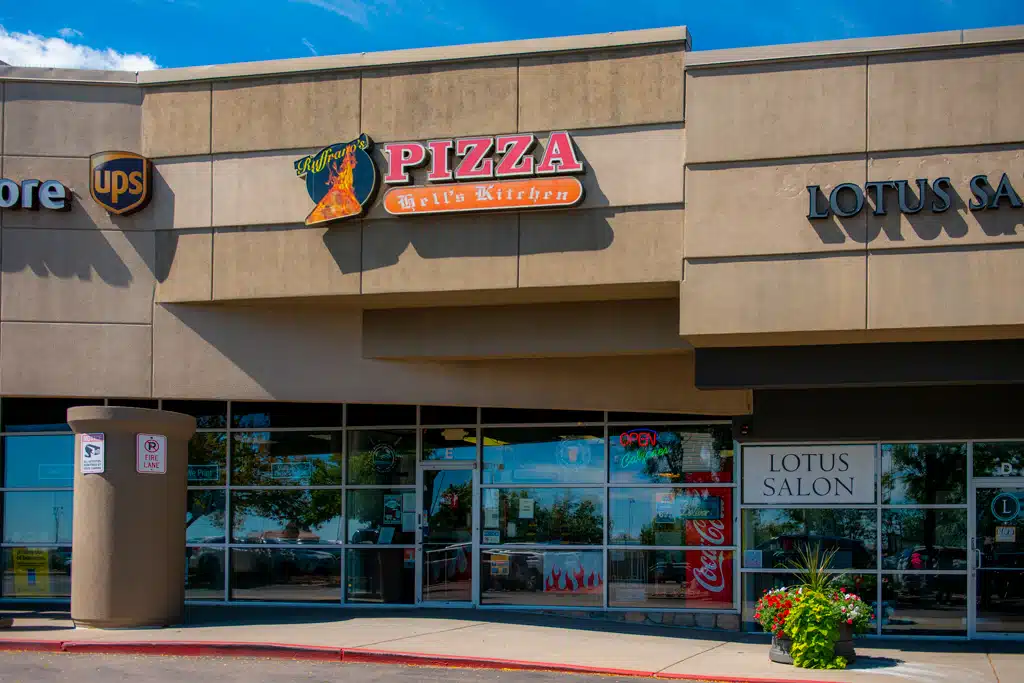
Ruffrano's Hell's Kitchen Pizza Cheyenne
Address: 1670 E Cheyenne Mountain Blvd, Colorado Springs, CO 80906
Phone number: +17195764355
FAQ About Pizza Place Cheyenne
What's the most popular pizza place?
The "most popular" pizza place depends on whether you measure by location count, total sales, or customer favorite status.
What is the 2 pizza rule?
The two-pizza rule is a management principle made popular by Amazon founder Jeff Bezos. It states that a team or meeting should never be larger than what can be fed with two large pizzas—typically translating to a group of 5 to 10 people (or roughly 6 to 12 people depending on appetites).
Is 2 pizzas enough for 10 people?
No, 2 pizzas are usually not enough for 10 people.